Mandon Travel Service万通旅行社

Coast & Sahara——6 Days 5 Nights Classic Tunisia(English‑speaking group) [NO. 4874] Double Check

[Minimum 2 pax, depart every Sunday] 6-Person Premium Small Group / No Shopping Itinerary / 6 Days 5 Nights Tour of Tunisia / Discover Both Mediterranean Coast and Sahara Desert Landscapes in One Trip

English Speaking Guide
D1 Tunisia D2 Tunisia D3 Tunisia Kairouan Tozeur D4 Tozeur D5 Tozer Matmatta Eljem Suss D6 Sousse Tunisia Airport Transfer
New Satisfaction 0 Travelers joined 0 Reviews
From € 1620
Guide Language

English

English
Departure
Select a Date
Adult

1

2

3

4

5

6

7

8

9

2
Children

0

1

2

3

4

5

6

0
Special rate for children
  • Overview
  • Itinerary
  • Price Explanation
  • Guide
  • Notes
  • Reviews( )
  • Q&A
Tour Features

Route: Coast & Sahara——6 Days 5 Nights Classic Tunisia(English‑speaking group) [ Middle East & North Africa ]

Departure:

D1 Tunis Meeting Point: Tunis-Carthage International Airport

Arrival:

D6 Tunis Drop Off: Tunis-Carthage International Airport

Outline: Tunisia-Kairouvan-Tozeur-Matmata-Eljem-Sousse-Tunisia

Discounts: Special rate for children: Child under 12 years old enjoy a 15% off (only active when sharing a double room with 2 full paid adults)

Note: Single Supplement: from €300/person ;

Translation
Disclaimer:
This website has been translated into English using machine translation for your convenience. Please note that machine translations may contain inaccuracies or errors and are intended for general understanding only. The original Chinese version is the official version. In case of any discrepancies, the Chinese version shall prevail.

Sightseeing Highlights
  • Kairouan
  • Ogba Mosque
  • Sidi Shahab Mausoleum
  • Chebika
  • Angkmelel
  • Mattema
  • Al Jem Colosseum
  • Port of Condado
  • Ruins of the ancient city of Carthage
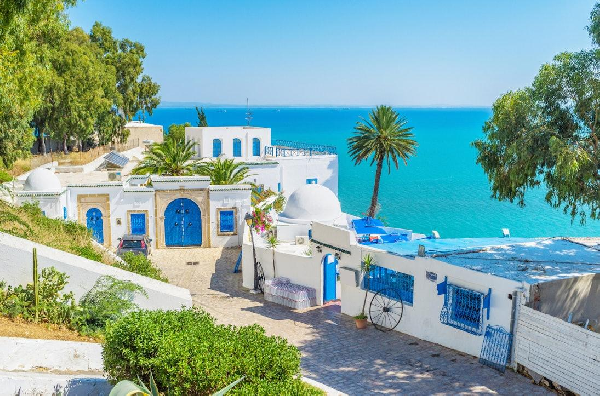
  • Sidi Bou Said
  • Medina Of Tunis
  • Mides Canyon
  • Meidia Of Sousse
  • Rabati Castle
Tour Overview
  • Local hotels

  • 2 Pick-up Locations

  • Air-conditioned Coach/Van

  • Meals Refer to the itinerary for meal details

  • English Speaking Guide

  • Not Applicable

Itinerary Download Itinerary: PDF WORD
D1
Day 1 Tunisia
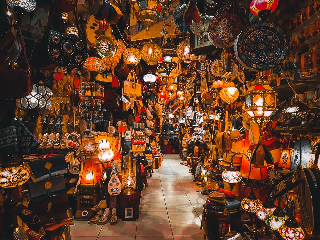
Upon arrival in Tunisia, you will be met by your guide and transferred to your hotel for rest. Today is a free day, or you may choose to visit the Medina of Tunis. The Medina of Tunis, also known as the Old City, was founded in 698 AD and still retains its ancient Arabic character, characterized by its white-painted low houses and winding alleyways. The city boasts 700 historical sites, including palaces, mosques, tombs, Islamic schools, and fountains from the Al-Muwahid and Hafs dynasties. The Great Mosque of Zaituna, the heart of the Old City, was built in 704 AD and rebuilt in 864 AD; it is one of the leading institutions of Arabic religious learning. The Old City combines housing, handicrafts, and commerce, with thousands of workshops and shops. Its Arab markets are particularly distinctive, with alleys categorized by trade, such as copperware alleys, gold and silver jewelry alleys, and spice alleys, maintaining a feudal, decentralized small-scale workshop production method and exuding a rich Arabic atmosphere. In 1979, Tunisia's Old City was inscribed on the UNESCO World Heritage List. The World Heritage Committee considered it a testament to one of the greatest and richest cities in the Islamic world from the 12th to the 16th centuries, and a prominent example of how traditional human lifestyles have changed with society.
Full Day
  • Medina Of Tunis
[ Medina Of Tunis ]

The Old City of Medina, Tunisia, was founded in 698. Its pure white, low-rise houses and winding streets exude Arabic charm, and the city boasts over 700 historical sites, with the Grand Mosque of Zaituna as its central landmark. The streets and markets are clearly divided into different functions, and numerous workshops stand side by side, creating a vibrant and bustling atmosphere. It witnessed the golden age of Islamic civilization and was listed as a World Heritage Site in 1979. It is not only a microcosm of the ancient city's character but also a vivid example of the evolution of traditional North African life.

Breakfast: On your own; Lunch: On your own; Dinner: At the hotel
Tunisia or surrounding cities
D2
Day 2 Tunisia
Tourist Attractions: Bardo Museum, Carthage Ruins, Sidi Bou Said (Blue and White Town) Bardo Museum: The Bardo Museum is the second largest museum in Africa. Originally a 13th-century palace of the Hafs dynasty, it was later expanded during the Ottoman Empire. In 1882, the French colonial government began converting it into a museum, which officially opened in 1888. The museum has over 40 galleries and exhibition halls, with exhibits divided into six sections: Prehistoric, Phoenician, Roman, Christian, Arab-Islamic, and Greek art, displaying tens of thousands of artifacts. Among its most famous collections are Roman mosaics; the museum houses a rich collection of mosaics from around the world, including masterpieces such as "The Triumph of Neptune" and "Ulysses and the Siren." These mosaics, crafted with natural materials such as colored stones, jasper, agate, ruby, and coral, showcase the exquisite craftsmanship and the convergence and evolution of civilizations along the southern Mediterranean coast over three thousand years, from Phoenicia and Rome to Islam. They represent a vital treasure trove of mosaic art in the world. Carthage: Carthage is an ancient city founded by the Phoenicians in 814 BC. It was once the capital of the Carthaginian Kingdom. In 146 BC, the city was razed to the ground by Roman troops. Later, Rome rebuilt the city on the original site, making it the capital of the Roman province of Africa. In 439, the Vandals conquered Carthage, and in 533, it became a territory of the Eastern Roman Empire. It was completely abandoned in the 7th century due to the wars triggered by the rise of the Arab Empire. Many Roman-era relics remain at the site, including a great temple whose open-air colonnade preserves statues of the Roman gods of victory and harvest. There's also the famous Antonine Baths, the fourth largest bathhouse in ancient Rome, complete with changing rooms, cold water chambers, and other facilities, its water supply brought in through a 60-kilometer-long aqueduct. In addition, there are architectural remains such as an amphitheater and an oval arena. The Carthaginian ruins are an important treasure trove for studying ancient Mediterranean civilization, witnessing the cultural fusion and collision of different peoples such as the Phoenicians and Romans, and are of great significance for understanding ancient architecture, art, politics, and economics. It was listed as a World Heritage Site in 1979. Sidi Bou Said: This blue and white town features white walls and blue doors and windows, creating a unique blue and white color scheme with a strong Andalusian style. In the 13th century, the mystic Calaf Ben built a house on a hill, which was the prototype of Sidi Bou Said. It was once one of Tunisia's gateways to Europe, and historically, Romans, Spanish, Turks, and others invaded this area, resulting in a fusion of diverse cultures. The blue and white town is an artist's paradise, attracting numerous painters fro
Full Day
  • Sidi Bou Said
  • Ruins of the ancient city of Carthage
[ Sidi Bou Said ]

Known as one of the world's most romantic towns, it has the same azure Mediterranean and white houses as Greece, but it is an Arabic-style blue and white atmosphere.

[ Ruins of the ancient city of Carthage ]

With over 3,000 years of history, the city of Tunisia, known as the National Monument, is one of the greatest archaeological sites ever discovered, an important symbol of ancient civilizations in the Mediterranean.

Breakfast: at the hotel; Lunch: Mediterranean seafood lunch; Dinner: at the hotel.
Tunisia or surrounding cities
D3
Day 3 Tunisia Kairouan Tozeur
After breakfast, travel to Kairouan. Visit the following attractions: Uqba Mosque, the Mausoleum of Sidi Sahab, and the Agrabit Reservoir. After lunch, continue your journey to Tozeur. Kairouan: Kairouan is a historical and cultural city in east-central Tunisia and a holy city for Islam. In 670, the Arab general Uqba established a permanent fortified residence here. From 800 to 909, it became the capital of the Agrab dynasty, developing into an important political, commercial, religious, and cultural center in North Africa. After the 11th century, its status declined due to the rise of Tunis, but it remained a holy city for Islam. Kairouan is known as the "City of Three Hundred Mosques," with numerous mosques scattered throughout the city. Among them, the most famous is the Uqba Mosque, the oldest and largest mosque in North Africa, and one of the four largest mosques in the world. Due to Kairouan's water scarcity, locals built 15 reservoirs in 862 AD, among which the Agrabit Reservoir is well-preserved and open to tourists. In 1988, Kairouan was inscribed on the World Heritage List as a cultural heritage site. It is also a center for wool, leather, grain, and olive oil, and is renowned for its fine Tunisian leather, handwoven carpets, and copperware. Tourism is also quite developed.
Full Day
  • Kairouan
  • Ogba Mosque
  • Sidi Shahab Mausoleum
[ Kairouan ]

It is one of the four holy places of Islam. There are twists and turns in the streets and shops, there are more than 80 mosques, more than 100 mausoleums, dozens of reservoirs and dome indoor market. Due to the lack of water in Kailuan, the locals built 15 reservoirs in 862 AD. There are two large and one small pools known as the Agrabite Pool for visitors to visit. The water aqueduct is drawn from a distance, first enters the small pool to settle, and then enters the large pool for use.

[ Ogba Mosque ]

It is the first largest mosque established by Islam in North Africa. It is an imposing and unique institution that has become a precious ancient cultural and religious heritage of Tunisia and the Arab world and has been listed as one of the key cultural relics protection units by UNESCO.

[ Sidi Shahab Mausoleum ]

Also known as the "Barberis Mosque", the entire mosque is centered on the mausoleum and decorated with ceramic tiles. It is different from other mosques and has a more elegant Andalusian style.

Breakfast: at the hotel; Lunch: local lunch; Dinner: local specialty chicken stew with dates.
Tozeur or surrounding cities
D4
Day 4 Tozeur
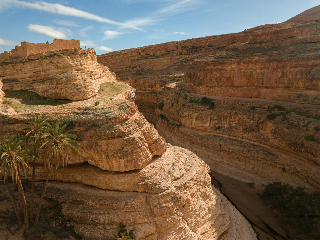
Sightseeing: Three oases (Chebika, Damehza, Mides Canyon), and Onk-Erimal (a filming location for Star Wars). After lunch, enjoy the afternoon at your hotel for free time. Tozeur: An oasis city, known as the "Gateway to the Desert." Tozeur was an important ancient Numidian town located on the trade route from Biskra to Gabis, witnessing the fusion of civilizations from multiple historical periods. Tozeur is also one of the world's most famous oases, boasting 1,000 hectares of date palm groves with approximately 200,000 date palm trees, earning it the nickname "Land of Palms." In addition, nearby are the Chebika Oasis, Tamaza Waterfall, Mides Canyon, Onk-Erimal, Jerid Salt Lake, and the Sahara Desert, offering stunning scenery. Chebika Oasis: Backed by the Atlas Mountains and facing the Gihasa Salt Lake and the Sahara Desert, its unique geographical location makes it a vibrant oasis in the desert. The oasis was formed by springs gushing from underground, reportedly flowing 20 liters of water per second. These springs formed streams, waterfalls, and lakes, providing life to the oasis. It was once a Roman outpost and later a Berber settlement. A flood in 1969 destroyed the villages on the mountain, leaving only ruins; the residents have since moved downhill. Tamerza Oasis: Located between the Chebica and Mides Oasis. Smaller than Chebica, Tamerza features towering waterfalls, its lush vegetation nourished by their water. The weathered rock walls bear magnificent patterns, reminiscent of the Grand Canyon. Mides Canyon: Located on the border between Tozeur and Algeria, the Mides Canyon was carved out by an ancient river that dried up over time, leaving behind this spectacular canyon. The canyon stretches for approximately 7 kilometers, featuring unique rock formations and steep, axe-cut cliffs on both sides. The exposed rocks and reddish-yellow valleys create a desolate beauty, earning it the nickname "North African Grand Canyon." It was one of the filming locations for the famous movie *The English Patient*, and also featured in the pod-fighting scene from *Star Wars*. Its unique landscape adds a mysterious, alien atmosphere to the films. Ong Jemel, located on the edge of the Sahara Desert, is world-renowned as a filming location for *Star Wars*. Many scenes from the filming are preserved here, such as the architecture of Tatooine, attracting numerous movie fans and tourists. Visitors can enjoy the thrill of dune bashing in four-wheel-drive vehicles while admiring the magnificent scenery of the Sahara.
Full Day
  • Angkmelel
  • Mides Canyon
  • Chebika
[ Angkmelel ]

Also known as Camel Rock, here is the location of the "British Patient", not far from the location of "Star Wars".

[ Mides Canyon ]

Midas Canyon, located on the edge of the Sahara Desert, is a rugged 7-kilometer-long canyon sculpted by ancient rivers over millions of years, earning it the nickname "Grand Canyon of North Africa." The distinct textures of the layered rock walls and the stark, reddish-brown stones create a desolate and majestic landscape. A filming location for Star Wars, the desolate and unique desert canyon scenery possesses an inherent sense of mystery, combining natural geological beauty with the nostalgia of classic cinema.

[ Chebika ]

This is a desert oasis in Tozeur. Its hillside is formed by accumulated fossilized coral and seashells from ancient seabeds. Small waterfalls cascade down the canyon. Thanks to steady water sources nourishing this land, a grove of date palm trees thrives within the canyon.

Breakfast: at the hotel; Lunch: local Raid courtyard lunch; Dinner: at the hotel.
Tozeur or surrounding cities
D5
Day 5 Tozer Matmatta Eljem Suss
After breakfast, we will travel across the Jerid Salt Lake to Matmata, where we will visit a Berber cave for refueling. After lunch, we will travel to El Jem to visit the Colosseum. In the evening, we will arrive in Sousse and check into our hotel. Matmata: A Berber settlement located in a rugged mountainous region composed of loess and gravel, on the edge of the desert, it receives direct sunlight and is influenced by the Sahara Desert, resulting in very high temperatures. Due to these harsh natural conditions, the local Berbers developed a unique cave-dwelling tradition. They first excavate a large pit in the ground, then dig artificial caves horizontally from the side of the pit to serve as rooms. These caves are quiet, have fresh air, and effectively resist the high temperatures, keeping them warm in winter and cool in summer. Today, most of the original inhabitants have moved to modern buildings, but some still live here, and some caves have been converted into hotels. Matmata is an important filming location for the movie *Star Wars*, attracting many Star Wars fans. El Jem: In ancient Roman times, this was an important city of the Roman Empire in North Africa. From 146 BC to 439 AD, Rome ruled Tunisia for nearly 600 years, leaving behind a wealth of Roman-era architecture. The El Jem Colosseum is a prime example, built in the early 3rd century AD and one of the world's three largest amphitheaters. The amphitheater's walls are 36 meters high, divided into three tiers, with 500 gates and a capacity of approximately 40,000 people. Its architectural style is typical and elegant, making it one of the best-preserved amphitheaters in the world. Famous French writers such as Maupassant and Flaubert visited the amphitheater, describing it as "the most magnificent amphitheater in the world." Furthermore, many scenes from the Hollywood film *Gladiator* were filmed here.
Full Day
  • Al Jem Colosseum
  • Mattema
[ Al Jem Colosseum ]

It is one of the three largest Colosseums in the world and is currently the most preserved Colosseum in the world, second only to the Colosseum. Many famous French writers such as Maupassant and Flaubert have made a special trip to this tour and described it as “the world's wonderful colosseum” and “the symbol and symbol of the Roman Empire in Africa”. Then drive to Sousse and return to the hotel after your arrival.

[ Mattema ]

It is the general name of the Berber tribe, which shows the unique architecture of the cave dwellings that have always been inhabited. This is also the location of the alien disco scene in the first Star Wars movie.

Breakfast: at the hotel; Lunch: local lunch; Dinner: local dinner
Sousse or surrounding cities
D6
Day 6 Sousse Tunisia Airport Transfer
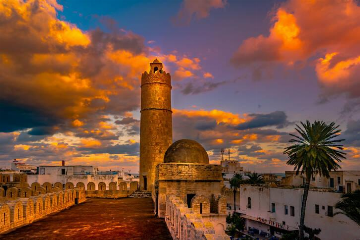
After breakfast, tour Sousse. Attractions: Sousse Medina, Ribat Fortress, Port Condavi. Return to Tunisia, concluding the tour. Sousse Medina (Meidia of Sousse): Also known as the Old City, Sousse Medina is the core area where Arabs congregate. Its narrow, winding streets are lined with traditional Arabic-style buildings, numerous mosques, Islamic schools, handicraft shops, and open-air markets. The Ribat Mosque is one of the most important buildings in the area. Sousse Medina was listed as a UNESCO World Heritage Site in 1988. Ribat Fortress: Ribat originates from Arabic, meaning "fortress" or "fortified monastery." It is an early Islamic architectural style that combined military defense, religious practice, and education, commonly found in North Africa and the Iberian Peninsula. The Ribat Fortress in Sousse was built in the late 8th century (around 786 AD) and is one of the best-preserved early Islamic Ribat structures in North Africa. It was inscribed on the World Heritage List in 1988 along with the Old City of Sousse. It serves as both a defensive fortress and a religious center, featuring a watchtower on its top floor overlooking the Mediterranean Sea and the old town of Sousse. Inside, it includes a mosque, prayer rooms, and meditation halls, its architecture simple and dignified, blending military defense with Islamic religious features. Candavi Port, known as the "beautiful garden port of the Southern Mediterranean," is modeled after a blue and white town. The surrounding houses are all Andalusian-style white buildings, mostly used as shops, cafes, restaurants, and hotels, creating a fresh and elegant atmosphere. The harbor is filled with boats for tourists to take cruises to see dolphins and enjoy the sunset. A long boardwalk at the end of the harbor offers views of the distant harbor city and the nearby beach.
Full Day
Important Notes:

The above itinerary is for your reference only. The travel agency reserves the right to adjust the order of the itinerary according to flight availability. In the event of force majeure such as marches, strikes, attraction maintenance, or natural disasters that prevent visits from being made, the travel agency reserves the right to use other relevant alternative attractions or hotels.

Note: The times shown above only serve as recommendations. The actual arrival time may be delayed due to a variety of force majeure circumstances, including bad weather, gridlock, accidents, festivals, events, riots, strikes, etc. We apologize about that. If you have other trip plans and need to take other transitions to get to other cities, please reserve at least three hours of extra time so as to avoid any issues with delayed travel. If you fail to arrange enough time while planning your trip, our company will not take into account any losses you encounter. We appreciate your understanding.


  • Port of Condado
  • Meidia Of Sousse
  • Rabati Castle
[ Port of Condado ]

It is the most beautiful garden port in the South Mediterranean. The beach is white and the sea is clear. It is a good choice to watch the sunset in the Mediterranean.

[ Meidia Of Sousse ]

Susmedina, or the Old City, is the heart of the Arab-populated old city. Its winding streets are lined with traditional Arab houses, mosques, handicraft markets, and open-air bazaars, with the Ribat Mosque as its central landmark. The entire Old City is vibrant with life, blending everyday life with ancient charm. It was listed as a World Heritage Site in 1979, perfectly preserving the unique local flavor and Islamic architectural features of a North African coastal old city.

[ Rabati Castle ]

Built in the late 8th century, Sussribat is one of the best-preserved early Islamic fortresses in North Africa and was listed as a World Heritage Site along with the Old City. It served both military defense and religious purposes, with a top-floor watchtower offering panoramic views of the Mediterranean Sea and the entire city. Inside, there are prayer rooms and meditation rooms. The architecture is simple and imposing, blending the unique character of a coastal fortress with Islamic religious architecture.

Breakfast: at the hotel; Lunch: on your own; Dinner: on your own.
Price Explanation

Price list:

Euros per person 4-star/diamond hotel 5-star/diamond hotel
September 1st - December 15th 1620 For further inquiries

Special note:

(1) The system calendar price is set to 4-star/4-diamond hotels by default.

(2) For tours that span Christmas, New Year's Day, and Easter, the official website calendar does not set tour prices. Please contact customer service for holiday surcharges!

(3) Recommended hotels:

4-star/4-diamond (hotels arranged by default in the itinerary):

Tunisia 4*: El Mouradi Gammarth or equivalent

Tozeur 4*: El Mouradi Tozeur or equivalent

Sussex 4*: El Mouradi Palm Marina / El Mouradi Palace or similar

5-star/5-diamond hotels (hotels requiring additional payment for the price difference):

Tunisia 5-star: Radisson Blu Hotel & Convention Center / Sheraton Tunis Hotel or similar

Tozeur 5*: The Mora Sahara Tozeur or equivalent

Sousse 5*: Movenpick Resort Sousse/Pearl Marriott Resort & Spa or similar

Note: The above prices are for reference only and no room reservations have been made at this stage. The final price is subject to the actual booking. After the tour is booked, the reference hotel will be the first choice. If the hotel is unavailable, a hotel of the same standard with no price difference will be arranged.

I. Included in the fee

1 Driver/Guide: 1 local driver + 1 licensed English-speaking tour guide

2. Transportation: Transportation will be arranged according to the number of passengers (usually one 14-seat minibus).

3. Meals: Breakfast and dinner at the hotel; lunch at a local restaurant.

4. Hotels: The itinerary will default to 4-star/4-diamond hotels.

5. Admission fees: Bardo Museum, Carthage ruins, Kairouan (3 sites), Al-Jemm Amphitheatre, and Sussribat Fortress.

6. Other: The vehicle is equipped with Wi-Fi; each person receives 1L of bottled water per day.

II. Costs do not include

1. Insurance: International travel accident insurance for guests

2. Airfares: International airfares to and from Tunisia from various locations.

3. Documents: Personal passport or any other documents required for entry into Tunisia

4. Beverages: Beverages served at hotels or group restaurants

5. Overtime: The working hours for drivers and tour guides are 10 hours per day. Overtime will incur a charge of US$100 per vehicle per hour.

6. Optional Excursions: Attractions and activities not mentioned in the itinerary.

7 Other: All other personal expenses, such as shopping, telephone bills, massages, etc.

8. Tipping: $10 per person per day

9. Upgrade : An additional fee applies for upgrading to a 5-star/5-diamond hotel.

Other notes
1. Child Price Discount Explanation: Children under 12 years old who do not occupy a bed can enjoy a 15% discount; one adult and one child will be charged the same price as the adult.
2. An English-speaking tour guide will accompany the group into the attractions and provide explanations.
3. Single travelers need to pay the single room supplement in advance. If you need to share a room, the single room supplement will be refunded after you are matched with someone else.
4. Note on Taiwan Passports: Taiwan passport holders are not eligible for visa-free entry to Tunisia. A visa must be obtained in advance to enter Tunisia with a Taiwan passport.

Kind tips:

1. Entry Requirements: Chinese citizens are eligible for visa-free entry, provided they have a passport with more than 6 months of remaining validity, a round-trip flight itinerary, and a hotel reservation.

2. Items to prepare: Sun-protective clothing, a windproof jacket, and UPF50+ sunscreen. Summer midday temperatures can reach 45℃, so staying hydrated and preventing heatstroke is crucial. Commonly used medications, such as cold medicine, gastrointestinal medicine, and mosquito repellent (especially important in desert and rural areas). Toothpaste, toothbrush, slippers, and other toiletries.

3. Charging preparation: The local area uses a European standard two-round-pin plug (220V), so be sure to bring your own adapter.

4. Internet Communication: Domestic mobile phones need to activate international roaming, or purchase a SIM card from operators such as Ooredoo or Inwi at the airport with your passport. A travel package with 10GB of data is recommended. Public WiFi needs to be checked for security to avoid the risk of fraudulent charges.

5. Dietary recommendations: The diet should be mainly Mediterranean. If you are not used to the taste, you can bring your own chili sauce, pickled vegetables, etc. Tap water is not drinkable.

6. Religious Respect: Tunisia is predominantly Muslim. Pork is forbidden, and discussing "pig" is considered taboo. Some people do not drink alcohol or smoke. Shoes must be removed before entering a mosque. Women should cover their hair with a long scarf. Avoid wearing sleeveless tops, shorts, or high heels. Flash photography must be turned off. Non-Muslims are not permitted to enter the core area of the prayer hall. During Ramadan, non-Muslims should avoid eating and drinking in public.

7. Code of Conduct: Friday afternoon is the time for Muslim prayer (Jummah). Please avoid making noise around the mosque. You need to obtain permission in advance to photograph locals. It is forbidden to photograph government buildings, military facilities and border areas. Professional equipment such as drones and telephoto cameras require prior permission.

8. Personal safety: Do not leave the group alone, and do not venture into the secluded alleys of the Medina Old Town alone, especially at night. When touring the Old Town and the desert, always stay with your guide to avoid getting lost.

9. Property Safety: Keep valuables, mobile phones, and wallets with you at all times. It is recommended to bring a multi-currency international credit card with a chip. For small purchases, carry cash in Tunisian dinars, which can be exchanged for US dollars or euros at the airport.

10. Tipping customs: It is recommended to respect local customs. You can give 2-5 dinars to restaurant and hotel waiters each time, 1 dinar to airport restroom staff, and no extra tip for taxis.

11. Medical coverage: Prioritize overseas insurance policies that include medical evacuation clauses.

12. Emergency Contact: Police: 117; Ambulance: 190; Chinese Embassy in Tunisia: +216-71780068. It is recommended to download an offline map in advance and mark the embassy's location.

Guide
Notes
Booking Terms and Conditions
Content of the notice

I. Pre-trip preparations

  1. Essential preparation: Purchase personal international travel accident insurance before departure.
  2. Internet and Communication: Please activate your mobile phone's international roaming service in advance to facilitate communication with family, friends, or local tour operators during your trip. Most hotels in Tunisia, except in the Sahara region, offer free Wi-Fi, but the network is often unstable. You can purchase a local SIM card at the airport and top up with call and data packages. There are three main local telecommunications companies: Tunisie Telecom (fastest and relatively stable network speeds in cities, but more expensive), Ooredoo (relatively stable network in the desert, good value), and Orange (slow network).
  3. Personal care products: toothpaste, toothbrush, slippers, high SPF sunscreen, moisturizing and whitening skincare products, etc.
  4. Basic medications: medications to prevent colds, relieve gastrointestinal problems, and prevent motion sickness.
  5. Other equipment: umbrella, camera, mosquito repellent, charging adapter, travel kettle, snacks, pickled vegetables, chili sauce, instant noodles, etc.
  6. Currency of payment: Prepare US dollars or euros to exchange for Tunisian dinars at the airport. Remember to exchange some small change in case you need to give tips. Only international credit cards with chips are accepted.
  7. Luggage: We recommend durable and stain-resistant materials, and lightweight luggage under 28 inches to prevent it from being inconvenient to carry or damaged during long journeys.
  8. Clothing Preparation: Tunisia has a Mediterranean climate along the northern coast, a grassland climate in the central region, and a desert climate in the south. There are significant temperature differences between day and night, and between the north and south. Layering and wind and sun protection are essential. Weather website: http://www.worldweather.cn/tu/tuindex.htm

Summer (June–August)

Temperature: 28–32°C along the coast; 35–38°C in the central region; 40–45°C in the southern desert, with 20–25°C at night.

Clothing: short-sleeved/sleeveless shirts, lightweight trousers/skirts, sun-protective clothing, sun hat, sunglasses; long-sleeved shirts and trousers are essential for sand and sun protection in the desert.

Reminder: Avoid going out at midday; bring a swimsuit to the beach; use high SPF sunscreen throughout.

Spring and Autumn (March–May, September–November)

Temperature: 15–26℃, with a large diurnal temperature range (10–15℃); occasional light rain in the north.

Clothing: Light long-sleeved shirt/T-shirt + light jacket during the day; knitwear/windbreaker at night; comfortable walking shoes (suitable for the cobblestone streets of the old city).

Reminder: Pack a light raincoat for March-April and October-November; women should pack a scarf for sun protection and to wear at mosques.

Winter (December–February)

Temperature: 8–16℃ along the coast, with heavy rainfall; 5–12℃ in the central region; 18–22℃ during the day and 5–8℃ at night in the southern desert; temperatures can drop below 0℃ in the mountains.

Clothing: Layering! Thermal underwear + sweater + thick coat/thin down jacket; scarf, gloves, and warm socks are essential; a windproof jacket is needed in the desert.

Reminder: It will be rainy in the north, so bring a waterproof jacket; there may be snow in the mountains, so bring non-slip shoes.

General Tips

Etiquette: Avoid exposure in Muslim areas; long sleeves and trousers are required in mosques; women should also wear headscarves.

Regional differences: Deserts have extreme day-night differences, so thermal insulation is a must; the north is rainy, so waterproofing is essential.

Essentials: High SPF sunscreen, moisturizer, sunglasses, comfortable walking shoes, and a power bank.

II. Entry and Exit

  1. Required documents: Passport valid for more than 6 months with at least 2 blank pages, round-trip airfare, hotel booking confirmation (or travel agency itinerary).
  2. Cash regulations: You must declare if you are carrying more than 5,000 dinars or other equivalent currency when entering or leaving Tunisia.
    1. Drones: Drones are prohibited from being brought into the country.
    2. Tobacco and alcohol research: 1 carton of cigarettes, 1 bottle of spirits (less than 1 liter)
  3. Contraband: Drugs, weapons, pornography/anti-government materials, meat/animal products, endangered plants and animals, fruits, vegetables and plants.
  4. Other situations: If you are asked for a tip by a staff member without having violated any rules, please firmly refuse!

  • Accommodation and meals
    1. Hotel facilities: Compared to hotels in China or other developed countries, local hotels have poor hardware facilities. Due to local culture and personality traits, staff efficiency is low. Generally, hotels do not provide toothpaste, toothbrushes, or slippers for environmental reasons.
    2. Dining Information: Local water quality is poor; please do not drink tap water directly. Drink purified or mineral water whenever possible. Meals generally do not include alcoholic beverages; please order à la carte according to your preference and settle the bill before check-out.
    3. Dress code: Please dress appropriately in hotel public areas, corridors, elevators, lobby, restaurants, bars, etc. Do not wear revealing clothing, shorts, or slippers.

IV. Travel Tips

  1. Safety Precautions: Always wear your seatbelt! Do not extend any part of your body out of the window while the vehicle is in motion to prevent your phone from being snatched by motorcyclists.
  2. Vehicle hygiene: Smoking is prohibited inside the vehicle; do not step on the seats with your shoes on.
  3. Property security: Keep valuables on your person and within sight at all times.
  4. Personal safety: Do not travel alone, do not trust locals for directions, and stay close to your teammates when entering the old city or desert. Traffic in Tunisia is chaotic in some areas, and traffic lights are often ineffective; please be extremely careful when crossing the road.
  5. Customs and Traditions: Tunisia is an Islamic country; please respect local religious beliefs and customs. When visiting mosques open to tourists, please remove your shoes, and women should ideally cover their arms and legs with a headscarf. Always ask for permission before taking photos of local residents. As Tunisia observes Ramadan, please try to avoid eating or drinking with locals and respect their fasting customs.

Tipping customs: Tips are expected for some restrooms along the way (1 dinar), hotel porters (2 dinars), restaurant servers (2-5 dinars), housekeeping staff (2-5 dinars), desert jeep drivers (5 dinars), and camel drivers (5 dinars).

Q&A

Questions previously answered may have different answers due to many reasons: season (date and year of travel), rates, availability, etc. Please contact us for more information. Online Chat

Message
* name
Phone
* Email
Type
* Subject
* Message
Submitting your request...
Address: Kloveniersburgwal 22-24 1012 CV, Amsterdam, The Netherlands
Tel: 020-6200004 / 6233487 / 6257757
Website:Website: http://www.mandon.nl
Contact Phone: 020-6200004
Email: amsterdam@mandon.nl
©2002-2026 Mandon Travel Service万通旅行社